
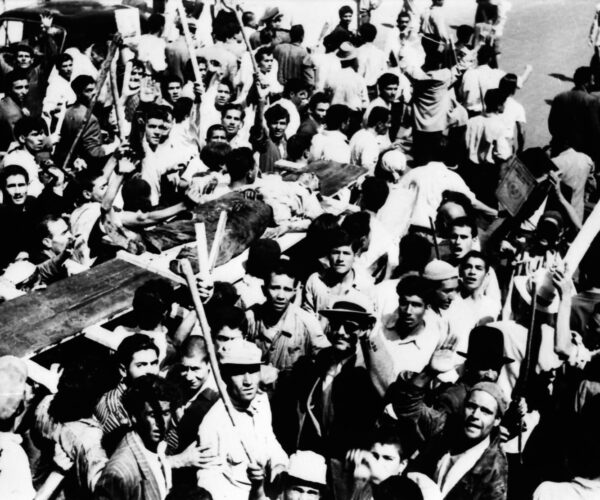
On the morning of 19 August 1953, crowds flooded the streets of Tehran, soon spreading through the city and heading toward the residence of Iran’s Prime Minister, Mohammad Mosaddegh. By nightfall, after a day of violence that left an estimated 300 people dead, the prime minister had fled. The coup that removed him – codenamed “Operation Ajax” – was planned by the CIA in collaboration with Britain’s MI6. It took sixty years before the CIA formally acknowledged its role in the coup and released documents detailing U.S. plans to remove Mosaddegh.
The political overthrow of Mosaddegh had consequences well beyond Iran. It demonstrated the potential of CIA-led covert operations as a tool for removing governments viewed as unfriendly, and the template was applied most directly in Guatemala in 1954. Echoes of the approach could be seen in U.S. efforts to destabilize the Allende government in Chile before the 1973 coup. It also amplified anti-American sentiment in Iran and bolstered nationalism, helping shape the environment in which the Iranian Revolution of 1979 was able to take hold. Given the long and fraught history of U.S.-Iranian relations, tracing the United States’ historical interventions in Iranian politics warrants renewed attention. The 1953 coup is a particularly illuminating case of U.S. involvement in Iran, as it is one source of the tensions we face today.
Although the coup is not widely recognized in American history, historians acknowledge its importance, mainly in a negative way. In a recent poll conducted among 350 members of the Society for Historians of American Foreign Relations, the coup was ranked as the fourth worst decision in the history of U.S. foreign policy, considered worse than the devastating use of a second atomic bomb on Nagasaki and the Senate’s rejection of the Treaty of Versailles. This raises the question of why and how the United States became involved in Iran.
To understand this issue, we need to look back to the Second World War and its immediate aftermath. During the war, Anglo-Soviet forces occupied Iran because they feared that its leader, Reza Shah, might side with the Axis powers, given his ties to Germany. These foreign powers forced the Shah to abdicate in September 1941 and exiled him – first to Mauritius, then to Johannesburg, where he died in July 1944. His son, Mohammad Reza Pahlavi, then became Iran’s new – and, as it turned out, final – Shah. Both powers were supposed to withdraw from Iran six months after the war ended. However, the Soviets initially refused to withdraw and supported Kurdish and Azerbaijani movements seeking independence from Iran, leading to the Iran Crisis of 1946 – an important development in the emergence of the Cold War, as it heightened tensions between the United States and the Soviet Union. Eventually, Soviet forces withdrew under pressure, and Tehran later reasserted control.
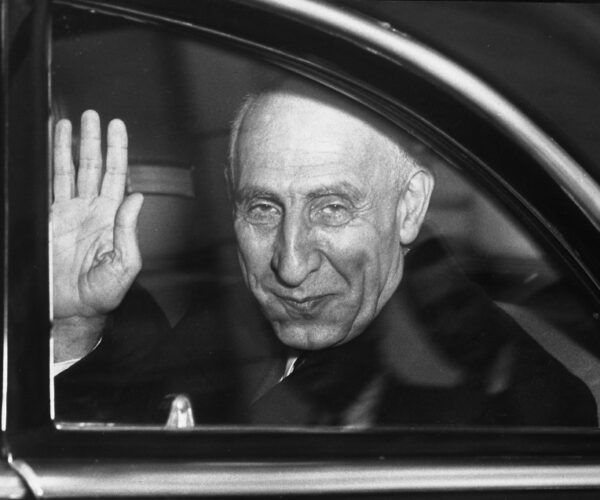
This did not, however, mark the end of foreign involvement in Iranian politics. The British continued extracting Iranian oil through the Anglo-Iranian Oil Company, which later became British Petroleum (BP). Growing nationalist sentiment, fueled by decades of foreign intervention, coalesced around the demand to nationalize the oil industry. In March 1951, the Iranian Parliament (Majlis) passed a nationalization law, and the political support for this move propelled Mohammad Mosaddegh – leader of the National Front, a diverse coalition of democratic, liberal, secular, socialist, and Islamic factions – into the prime ministership the following month. Once in office, he became the primary advocate and defender of nationalization. London was alarmed, fearing not only the loss of revenue but also the precedent this would set for British interests across the Middle East and the broader developing world. In response, the British applied diplomatic and legal pressure by taking the case to the International Court of Justice, along with implementing an oil embargo and economic sanctions against Iran.
While the Truman administration was reluctant to intervene and promoted diplomatic negotiations between U.K. prime ministers Clement Attlee and Winston Churchill and the Mosaddegh government, the election of Dwight D. Eisenhower shifted U.S. policy toward Iran. His administration feared that political instability would lead to a takeover by the communist Tudeh Party. CIA analysts did not believe this was a likely outcome. In a 1952 study titled “Probable Developments in Iran in 1952 in the Absence of an Oil Settlement,” it was argued that “a Tudeh coup is not imminent.” Similarly, a CIA report from 1953 reached nearly identical conclusions, stating that “Under these circumstances, the Communist Tudeh Party is not likely to develop the strength to overthrow the National Front by constitutional means or by force during the period of this estimate.”
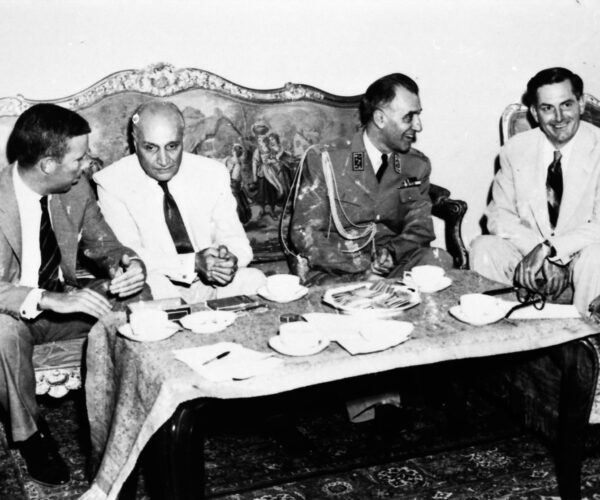
Despite these analyses, prominent members of the Eisenhower administration were more hawkish. By the summer of 1953, Mosaddegh’s own position had also become more precarious: he was increasingly governing through emergency powers and held a controversial referendum to dissolve the Majlis, which fractured his coalition and gave the coup organizers a domestic pretext for action. In March 1953, the administration authorized the CIA to begin planning a coup in close collaboration with British intelligence. Their plan included propaganda against Mosaddegh, linking him to communism and hostility to Islam, organizing demonstrations to generate chaos, and trying to influence political figures. They also specified that General Fazlollah Zahedi would succeed Mosaddegh and pressured the Shah to dismiss him and appoint Zahedi.
When the coup took place in August, it initially failed. The first attempt, on 15 and 16 August, was unsuccessful because Mosaddegh had been warned. As a result, key conspirators were arrested, and the Shah fled the country. Despite directives from the CIA headquarters to stop the operation, Kermit Roosevelt Jr., grandson of Theodore Roosevelt and a leading figure in the American effort to overthrow Mosaddegh, pushed forward with the coup by organizing fake demonstrations and seeking support within military circles.
In response to the unrest in Tehran, Mosaddegh prohibited all demonstrations. Subsequently, pro-Mosaddegh and Tudeh protestors were absent from Tehran’s streets, allowing pro-Shah and anti-Mosaddegh forces to march to the prime minister’s residence. After a day of fighting, which resulted in approximately 300 deaths, Mosaddegh surrendered the next day. In the aftermath, General Zahedi consolidated his power across Iran, completing the coup.
The coup not only marked the end of a period of experimentation with democratization in Iran and signaled the rise of the Shah’s autocratic rule, but also ingrained the notion that the Shah was subordinate to U.S. influence. Understanding this chapter in U.S.-Iranian history helps to explain the hostility directed toward the United States during the Iranian Revolution of 1979 and the antagonistic relations between the two countries ever since.
Resources at RIAS:
- Central Intelligence Agency, “Probable Developments in Iran in 1952 in the Absence of an Oil Settlement,” 4 February 1952, CIA Research Reports: Middle East, 1946–1976, Reel II, Frame 0344–0343.
- Central Intelligence Agency, “Probable Developments in Iran through 1953,” 9 January 1953, CIA Research Reports: Middle East, 1946–1976, Reel II, Frame 0360–369.
- Petherick, Christopher. The CIA in Iran: The 1953 Coup and the Origins of the US-Iran Divide. American Free Press, 2006.
- Young, Nancy Beck, ed. Documentary History of the Dwight D. Eisenhower Presidency. Vol. 10, CIA Intervention in Iran and Nationalization of the Iranian Oil Industry. LexisNexis, 2009.
Secondary Sources:
- Gasiorowski, Mark J., and Malcolm Byrne, eds. Mohammad Mosaddeq and the 1953 Coup in Iran. Syracuse University Press, 2004.
- Council on Foreign Relations, “The Survey: Methodology,” Best and Worst Decisions in U.S. Foreign Policy, accessed 4 March 2026, https://www.cfr.org/ten-best-ten-worst-us-foreign-policy-decisions/methodology/.
Photographs:
- William Arthur Cram, In front of Mohammad Mosaddegh’s home during the 1953 Iranian coup d’état, 19 August 1953. The Guardian / Wikimedia Commons. Public domain.
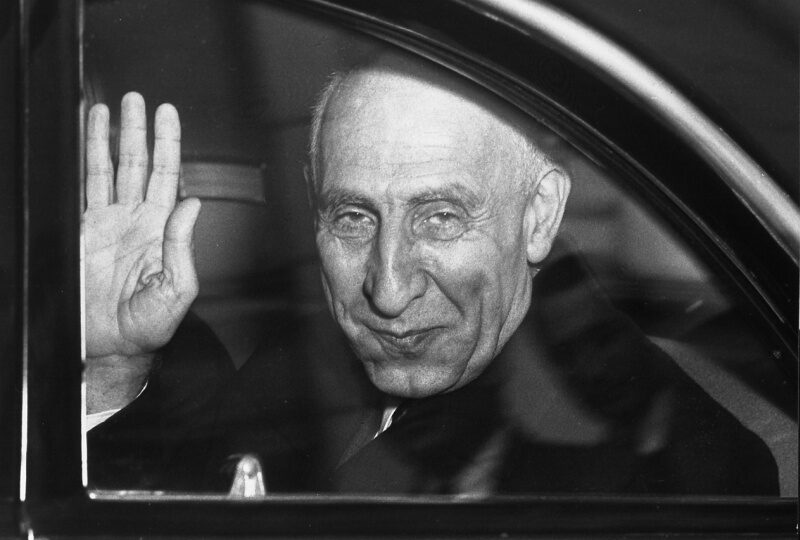
- U.S. Department of State, Mohammad Mosaddegh leaving for the Iranian Embassy, Washington, D.C., ca. 1951. Harry S. Truman Library & Museum (NAID: 350287259). Public domain.
- William Arthur Cram, Fazlollah Zahedi with Loy W. Henderson and William E. Warne after the 1953 Iranian coup d’état, 31 August 1953. The Guardian / Wikimedia Commons. Public domain.
