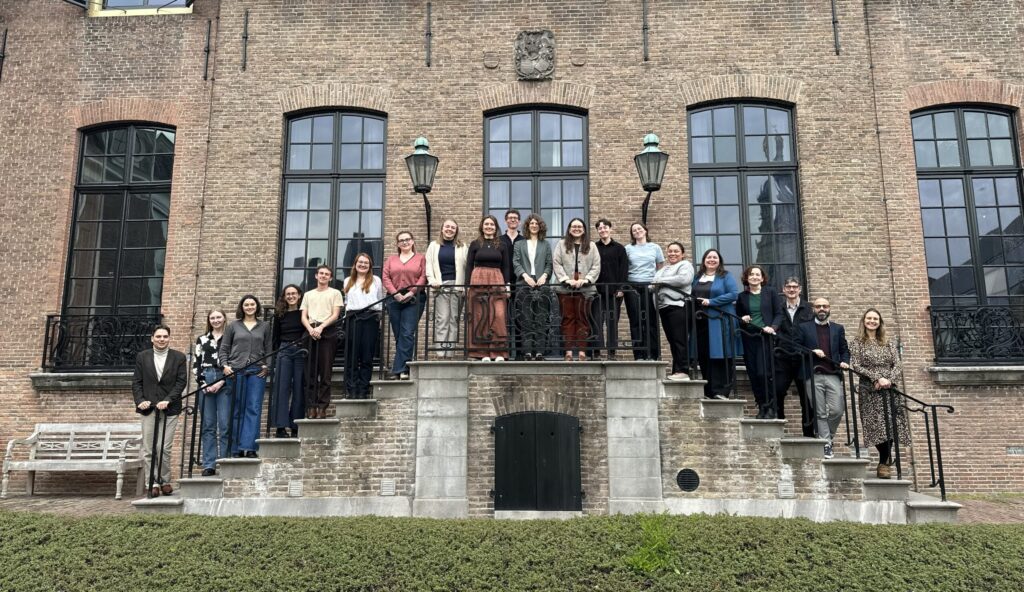

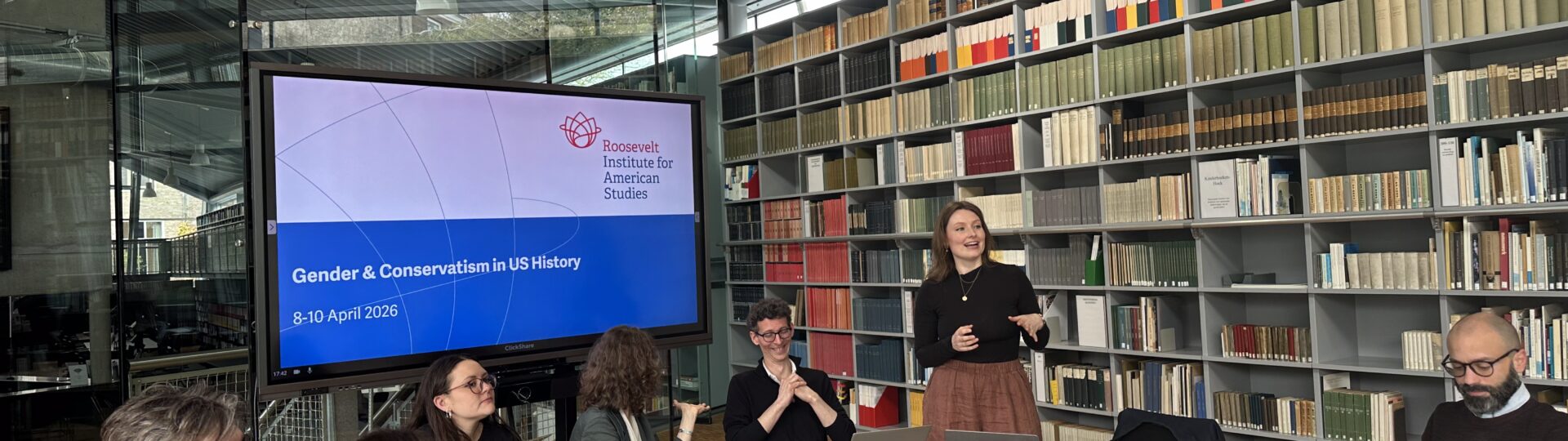
From 8 to 10 April 2026, the RIAS hosted a conference on “Gender & Conservatism in US History.” Challenging the characterization of conservatism as an inherently masculine domain, the conference foregrounded the roles of women and genderqueer historical actors, sought to rethink the political and cultural boundaries of American conservatism by centering gender, and used gender analyses to explore the deeper historical roots of conservatism across the nineteenth and twentieth centuries. Bringing together scholars working on social movements, political culture, religion, race, internationalism, and historical memory, the conference featured twelve presentations over two days. The event generated fruitful discussions, new perspectives and significant insights, highlighting both the importance of the field and the growing interest in examining the longer history of gender and conservatism in the United States.
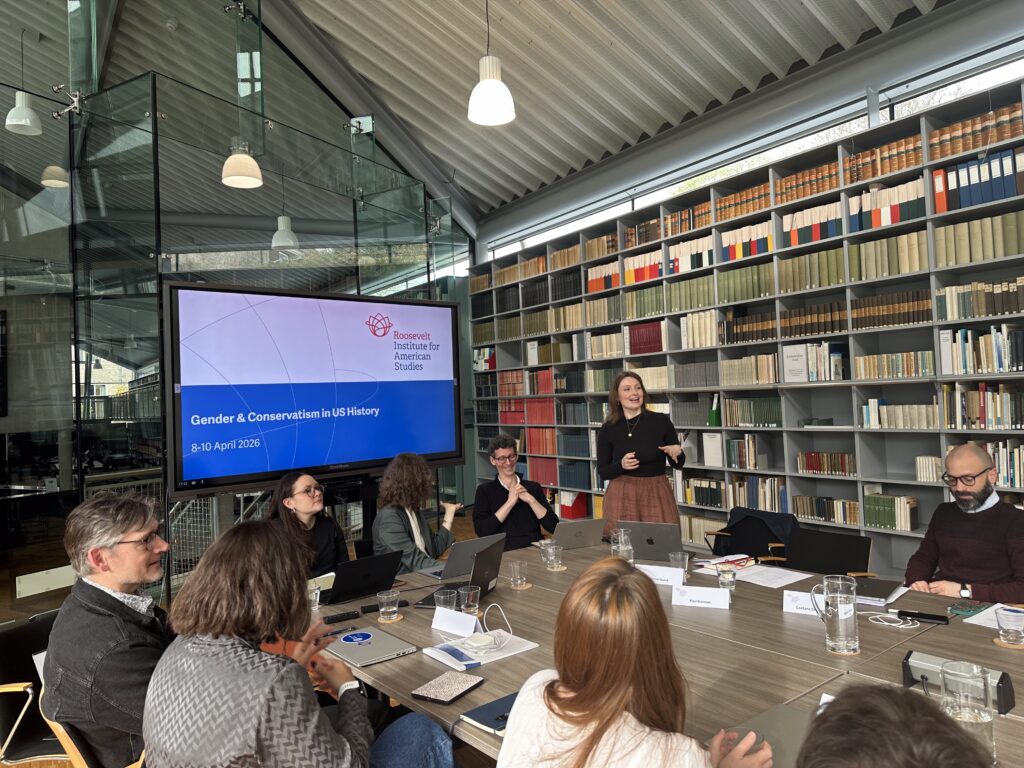
After participants were welcomed to Middelburg on 8 April, the academic program started on 9 April with a few words of introduction by postdoctoral researcher and conference organizer Jeanine Quené (RIAS). The first panel on the conservative reframing of feminism, chaired by Jeanine Quené, examined the intersections between feminist and conservative thought. Eden Young (University of Groningen) analyzed conservative tendencies within second wave radical feminism, particularly the deployment of gender essentialism resulting in transphobia. Nicole Colaianni (Heidelberg University) explored how conservatives attempted to redefine and reframe feminist discourse through debates over workplace sexual harassment. In the discussion, participants reflected on this intersection between conservatism and feminism in approach and practice.
The second panel on conservative women, internationalism and the boundaries of the liberal order, chaired by Jack Thompson (University of Amsterdam), turned to mid-twentieth-century global contexts. Katharina Rietzler (University of Sussex) examined American women’s divergent responses to anti-Zionism and anti-Semitism in the 1940s and 1950s, illustrating that the boundaries between liberalism and conservatism remained capacious at the time. Emma Post (University of Amsterdam) gave insight into the politics of Grace Abbott at the League of Nations, focusing on her anti-vice advocacy. During the discussion, the participants reflected on the nature of conservatism, liberalism and Progressivism, teasing out its ideological boundaries and historical overlap.
The third and last panel of the day, chaired by Professor Lisa McGirr (Harvard University), delved deeper into the importance of the nuclear family to the modern right. Julia Fournier (University of North Carolina, Chapel Hill) discussed the making of the pro-family movement by diving into the women-led conservative opposition to a federal childcare bill in the early seventies. Sophia DeLeonibus (Yale University) explored how the religious right mobilized the concept of gender identity, framing childhood gender nonconformity as predictive of homosexuality. Katie Heatherly (University of Notre Dame) explored evangelical women’s consumer culture, showing how sex advice manuals encouraged women to secure their marriages through (commodified) sex appeal. In the discussion, the participants reflected on the shift in political economy that underpinned these gendered anxieties and performances, the many intersections with race, and the rise of anti-gender thinking within the modern right.
The day concluded with a roundtable on gender, religion and conservative politics. Katie Heatherly, Katharina Rietzler and Jack Thompson opened the conversation by reflecting on some of the underexplored or emerging directions in the field. The discussion covered whether historians should approach evangelicalism as a theological or as a political-cultural movement; taking historical actors’ emotionality as well as rationality seriously; conspiracism in US history; the significance of apocalyptic thought; and interfaith connections across the political spectrum. Following a fruitful day of discussion, the participants walked over to Restaurant Cluys for well-deserved dinner and drinks.
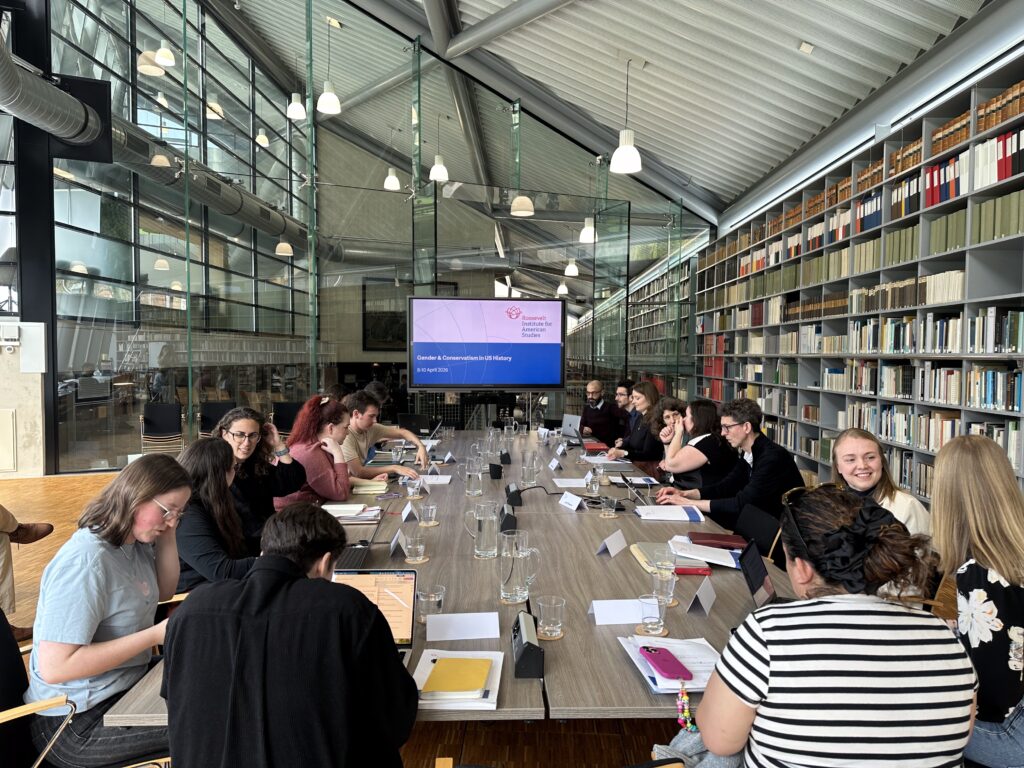
The morning session of day two started bright and early with a panel on conservative historical memory and the politics of commemoration, chaired by Katy Hull (University of Amsterdam). Sonia Gomez (Santa Clara University) examined Lillian Baker’s opposition to Japanese American redress, thereby highlighting how Baker used white feminism and gendered victimhood to resist racial justice claims. Emma Taylor (Queen’s University Belfast) shifted the chronology by analyzing public representations of female Civil War soldiers at the turn of the twentieth century. The discussion touched upon the dynamics of silence and silencing, as well as the political power and dangers of “unwomanly” behavior, such as militancy, radicalism and public displays of anger.
The final panel, chaired by Damian Pargas (RIAS/Leiden University), addressed white women’s conservatism in the antebellum and Civil War eras. Marise Bachard (Université du Québec à Trois-Rivières) introduced the concept of ‘whiggish conservatism’ through her study of Madame Le Vert’s political life in the antebellum South. Hope McCaffrey (Pennsylvania State University) examined the politics of Copperhead women in the Midwest, who opposed the Civil War and emancipation by invoking the conservative republican tradition. The discussion highlighted how these women were able to use their gender to their advantage in their political activities, and whether illiberalism is a useful term to understand nineteenth-century conservative politics. The panel ended with a broader conversation on the nature of conservatism in this period and how it changed over time – a recurring theme during the conference.
After a lunch break, Lisa McGirr (Harvard University) delivered the keynote address on Phyllis Schlafly and the genealogy of Trumpism. She introduced the concept of authoritarian populism, situating it firmly within a longer American political tradition. Through Schlafly’s career, McGirr traced the development of authoritarian populism as a political tendency within liberal democracy, identifying key features such as dualistic us/them thinking, a willingness to condone violence for the ‘right ends,’ the empowerment of strong leaders, the restoration of the ‘people’s power,’ and an America first vision of unilateral nationalism. The discussion that followed returned to several core themes of the conference, including the diversity of conservative traditions and the centrality of gender to the conservative project.
The conference concluded with closing remarks by Jeanine Quené (RIAS) and a final reception, marking the end of two days of fruitful scholarly exchange.