

Every year, the RIAS has the privilege of organizing the Theodore Roosevelt American History Award (TRAHA), an accolade that recognizes the most outstanding MA thesis on an American history subject composed at a Dutch university during the past academic year. Initiated in 1987, the TRAHA has been a beacon of academic excellence, fostering the study of US culture and society, and serving as a launchpad for many promising academic careers.
This year, the TRAHA jury, consisting of Jeanine Quené (Chair, RIAS), J.D. Schnepf (University of Groningen), George Blaustein (University of Amsterdam) and Maud Rijks (2025 TRAHA winner, Leiden University), reviewed ten exceptionally well-written and rigorously researched theses. All the finalists deserve recognition for their original insights and creative contributions, which collectively broaden the scope of US history and American Studies. The range of approaches and the relevance of the topics reflect the vibrancy of these disciplines in the Netherlands, while showcasing our students’ ability to critically engage with North American social, political and cultural dynamics.
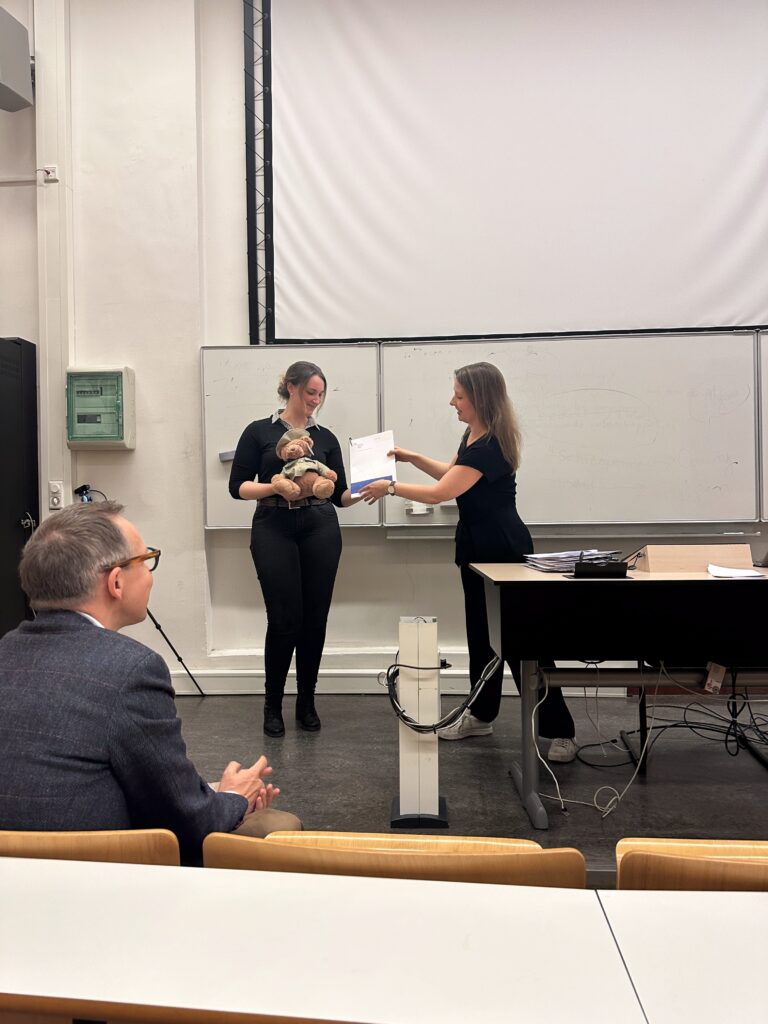
After careful deliberation, the jury unanimously awards the 2026 Theodore Roosevelt American History Award to Lucy den Elzen for Shielding the Homeland: The Imperial Logic of Security Through Civilian Response Training in Post-9/11 Detroit.
This thesis distinguishes itself through its exceptional ability to integrate theoretical sophistication with original research. It offers a nuanced and incisive critique of power, illuminating the entanglements between domestic securitization, imperial logics, and everyday practices of citizenship in the post-9/11 United States. Through a carefully constructed case study, the author connects local developments in Detroit to broader national and transnational dynamics, while also intervening meaningfully in ongoing scholarly debates.
The jury was especially impressed by the author’s command of complex theoretical frameworks and her ability to not only apply them, but also to critically engage with and refine them through her own findings. This results in a thesis that is both analytically rigorous and conceptually generative. With its essayistic style, which carefully links issues across levels of analysis, and its strong authorial voice, this thesis exemplifies the best of interdisciplinary American Studies and can be a model for future students.
The complete 2026 Jury report can be found here!