


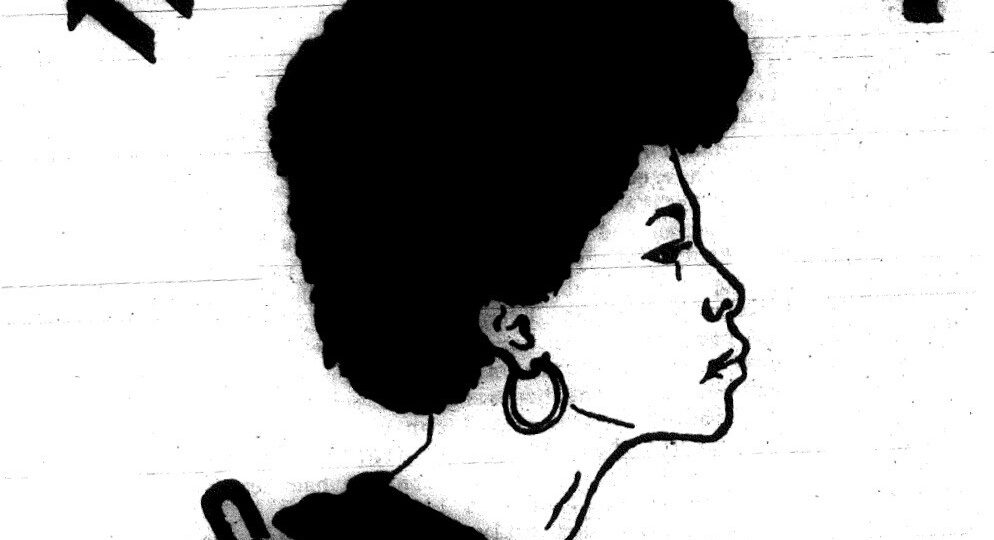
Newspaper clippings, prison writings, and Black revolutionary publications reveal how Assata Shakur (formerly JoAnne Chesimard) became an iconic figure in the Black liberation movement. The archival record at the RIAS preserves competing accounts of who Assata Shakur was. Through them, she emerges not only as a defendant and political prisoner, but also as a writer and revolutionary whose legacy continues to provoke debate
After encountering the Black Panther Party in Oakland, Assata Shakur joined its Harlem branch upon returning to New York (Shakur, p.203-204). During the late 1960s and early 1970s, the Panthers were among the organizations targeted by the FBI´s Counterintelligence Program (COINTELPRO), which was designed to “expose, disrupt, misdirect, discredit, or otherwise neutralize” the activities of its targets (Cunningham, p.6). While the FBI terminated COINTELPRO in 1971, it continued to investigate perceived radicals under the category of “subversion,’’ which denoted the efforts of political actors to “undermine or transform the government.’’ As Ivan Greenberg notes, in public speeches and private communications, FBI leaders “purported that the country faced the beginnings of a domestic revolution led by ‘urban’ guerrillas such as the Black Liberation Army and the Weather Underground Organization ” (p. 36- 37). It was within this repressive political climate that Assata Shakur became one of the FBI’s most closely watched radicals.
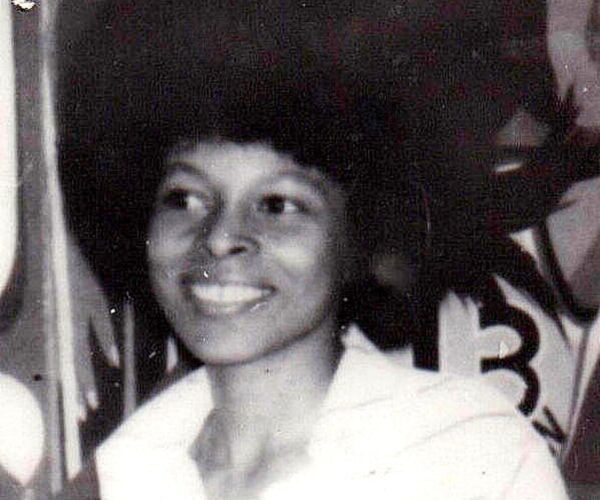
The night of 2 May 1973 marked a turning point in Assata Shakur’s life as she and fellow BLA members Zayd Malik Shakur and Sundiata Acoli were stopped on the New Jersey Turnpike by State Trooper James Harper, with Trooper Werner Foerster arriving as backup. Gunfire erupted, killing Zayd Malik Shakur and Foerster and leaving Assata Shakur seriously wounded; Trooper Harper was wounded as well. She was charged with two counts of murder, four counts of assault, one count of armed robbery, and one count of illegal possession of a weapon. In 1977, a jury convicted her of the murder of Trooper Werner Foerster, as well as of second-degree murder in connection with the death of Zayd Shakur. The judge subsequently dismissed the latter conviction. Shakur received a life sentence plus 26 to 33 years, despite medical and forensic testimony that her defense argued supported her innocence. In the years that followed, the Turnpike shooting incident became the defining event through which much of the American public came to know Assata Shakur.
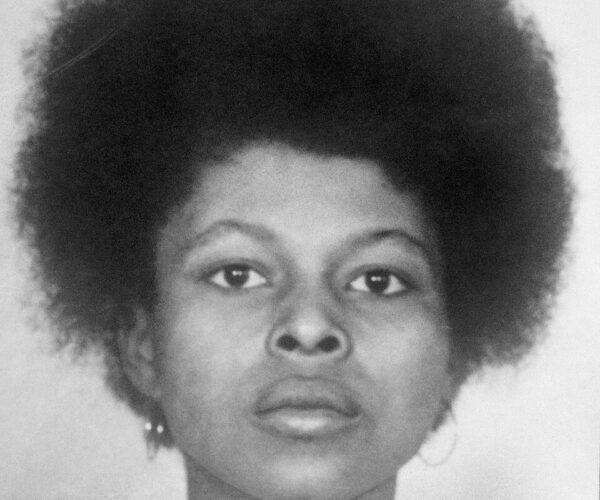
Newspaper coverage also shaped her public image. Regarding The New York Times, Berit Brink notes that “even the less overtly biased reports often used tendentious language to discuss Shakur, the Black Liberation Army, and the Turnpike trial’’ (p.193). For example, when the newspaper covered the murders of two patrolmen in 1972, the article reproduced theories that those responsible for the murders were “extremists connected with a Black Liberation Army, a loose, unstructured network of black terrorists the officials say are gunning for policemen across the country.’’ In the newspaper’s coverage, Shakur was identified as a “leading figure” of the “so-called Black Liberation Army.” Furthermore, The New York Times reported the prosecution’s description of Shakur as “an animal’’ who “executed’’ a state trooper. Following the verdict, the newspaper reported it with the headline: “Joanne Chesimard Convicted in Killing Of Jersey Trooper,” then leading to the inner pages with the subheading “MRS. CHESIMARD GUILTY IN SLAYING OF TROOPER.” The coverage framed Shakur first and foremost as a violent criminal, with little attention to her political activism and revolutionary thinking.
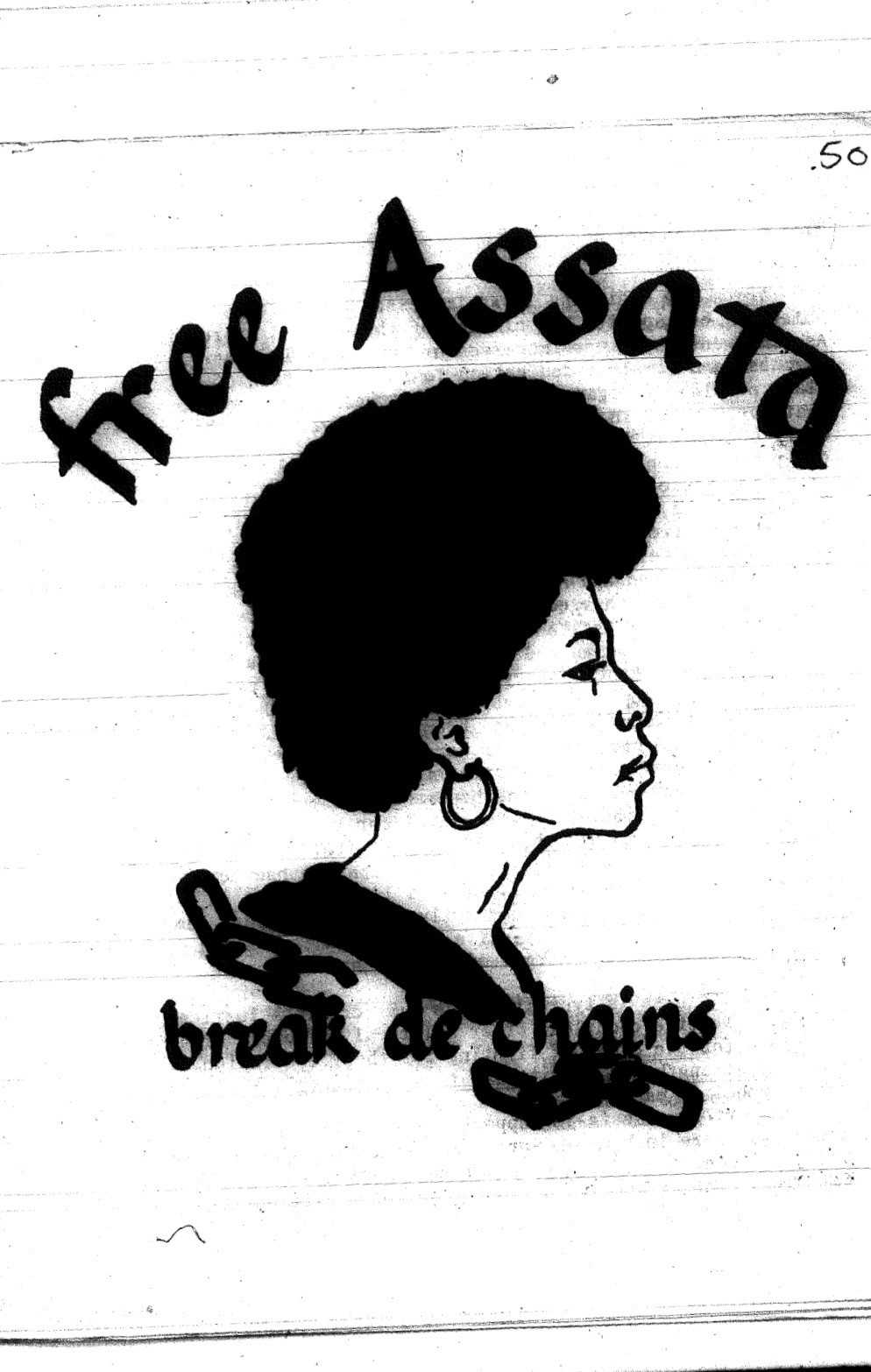
Shakur’s own words portray a very different narrative. An organization that supports her, named Assata Defense West, released a pamphlet titled “Free Assata – Break de Chains.” It consists of multiple writings by Shakur, including her To My People statement (1973), the Fourth of July Anti-Buy Centennial statement (1976), a chronology of her trials, poems, and her intended opening statement for the New Jersey Turnpike Trial in 1977. The publication states that Judge Appleby refused to allow either her or her attorney to read her statement before the (all-white) jury. In her statement, she rejects the image that the prosecution and the press constructed, pointing out that this was “not the trial of an animal, or of a monster or a thing but the trial of a human being.’’ She further argues that the jury’s perceptions had already been shaped by news coverage that was “negative and prejudicial,’’ based “not on fact, but on speculations and sensationalism.” Finally, she states that the jury “may or may not agree” with her “political beliefs,’’ but that they are “not on trial here.” Shakur emphasizes that she only brought them up to help the jury “understand the climate and the political and emotional context in which this case comes before you.” Shakur’s opening statement, read against the newspaper coverage, shows how archives preserve competing narratives: the state’s account of who she was, often relayed by the mainstream press, and her own voice, preserved in the movement press.
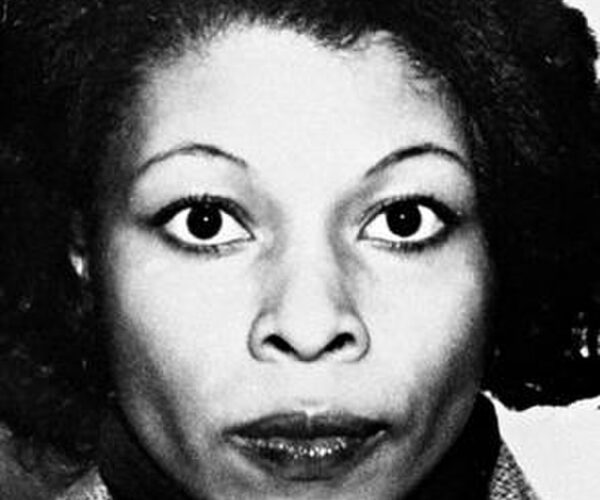
The courtroom may have denied Assata Shakur the chance to speak for herself, but she reclaimed her voice in prison. While incarcerated, Shakur wrote letters, poems, and political statements that were published in several activist publications, reaching audiences both inside and outside prison. This included To My People, written in the Middlesex County Workhouse and published in Break de Chains in 1973. Her statement was broadcast on many radio stations and republished in revolutionary publications such as Breakthrough, Crossroad, The Black Scholar, and Jihad News. While her courtroom statement sought to defend her against criminal charges, To My People reframes her imprisonment as part of a broader history of racial oppression and revolutionary struggle. Addressing “Black brothers, Black sisters,” Shakur states who she really is: “a revolutionary. A Black revolutionary.” She emphasizes the “hatred and slander that amerikkka is capable of,” listing both the colonial and imperial history of the US and its treatment of Brown and Black people, both inside and outside its borders. Toward the end of her statement, Assata Shakur delivered the lines that would become her most famous: “It is our duty to fight for our freedom. It is our duty to win. We must love each other and support each other. We have nothing to lose but our chains!”
After being imprisoned for more than six years, she escaped from the Clinton Correctional Facility for Women on 2 November 1979. After several years underground, Shakur surfaced in Cuba in 1984, where she was granted political asylum by Fidel Castro and lived there until her death on 25 September 2025. Media portrayals of Shakur still reflect the competing narratives that surrounded her in the 1970s. Reporting on her death, Fox News headlined: “Convicted cop killer Assata Shakur, an FBI Most Wanted terrorist, dead in Cuba, communist regime says.” The article quoted New Jersey officials condemning her for the “cold-blooded murder of an American hero” and cited the FBI’s description of the Black Liberation Army as “one of the most violent militant organizations of the 1970s.” At the same time, her message continues to resonate with new generations of activists. Since the Black Lives Matter movement emerged, crowds have adopted the closing lines of Shakur’s To My People statement as “Assata’s chant.” Clothing bearing the message “Assata taught me’’ has circulated widely, and murals of her face and words have appeared in cities across the United States. Together, these contrasting representations demonstrate that the struggle over Assata Shakur’s legacy continues through the documents, images, and voices that preserve her place in history.
Primary Sources
Assata Shakur, Assata: An Autobiography (Lawrence Hill Books, 1999) 1-296.
Assata Shakur, U.N. Human Rights Campaign Statement (1979, Nov 5) Accessed through the Freedom Archives.
“Free Assata – Break de Chains,” The Black Power Movement. Part 3: Papers of the Revolutionary Action Movement, 1962-1996, reel 11 (Roosevelt Institute for American Studies, Middelburg).
Walter H. Waggoner, “Chesimard Murder Trial Opens In New Brunswick: ‘Execution’ Of Trooper Charged As The Defense Questions Testimony,” The New York Times (1977, Feb 16).
Robert D. McFadden, “Warrant Issued in Police Slaying,” The New York Times (1972, Feb 19).
Walter H. Waggoner, “Joanne Chesimard Convicted In Killing Of Jersey Trooper: Mrs. Chesimard Guilty In Slaying Of Trooper,” The New York Times (1977, Mar 26).
Joseph F. Sullivan, “Assault Charges Add 26 Years To Mrs. Chesimard’s Life Term,” The New York Times (1977, Apr 26).
Louis Casiano, “Convicted cop killer Assata Shakur, an FBI Most Wanted terrorist, dead in Cuba, communist regime says,” Fox News (2025, Sep 26).
The Prairie Fire Organizing Committee, Breakthrough no.1 (1977, March) Accessed through the Freedom Archives.
Secondary Sources
David Cunningham, There’s Something Happening Here: The New Left, the Klan, and FBI Counterintelligence (University of California Press, 2004) 1-382.
Ivan Greenberg, “The FBI and the Making of the Terrorist Threat,” Radical History Review 111 (2011), 35-50.
Berit Brink, “Confined to the Margins: Necropolitics, American Identity, and Racial Separation in Assata by Assata Shakur,” in F. Guzel (Ed.): Narratives of Confinement in American Popular Culture. Anglia Book Series (De Gruyter Brill, 2025) 185-200.
