
The following research interns have taken or are currently taking part in RIAS projects as part of their university programs:
2026
Liam D’Souza-Bohannon (Erasmus University Rotterdam)
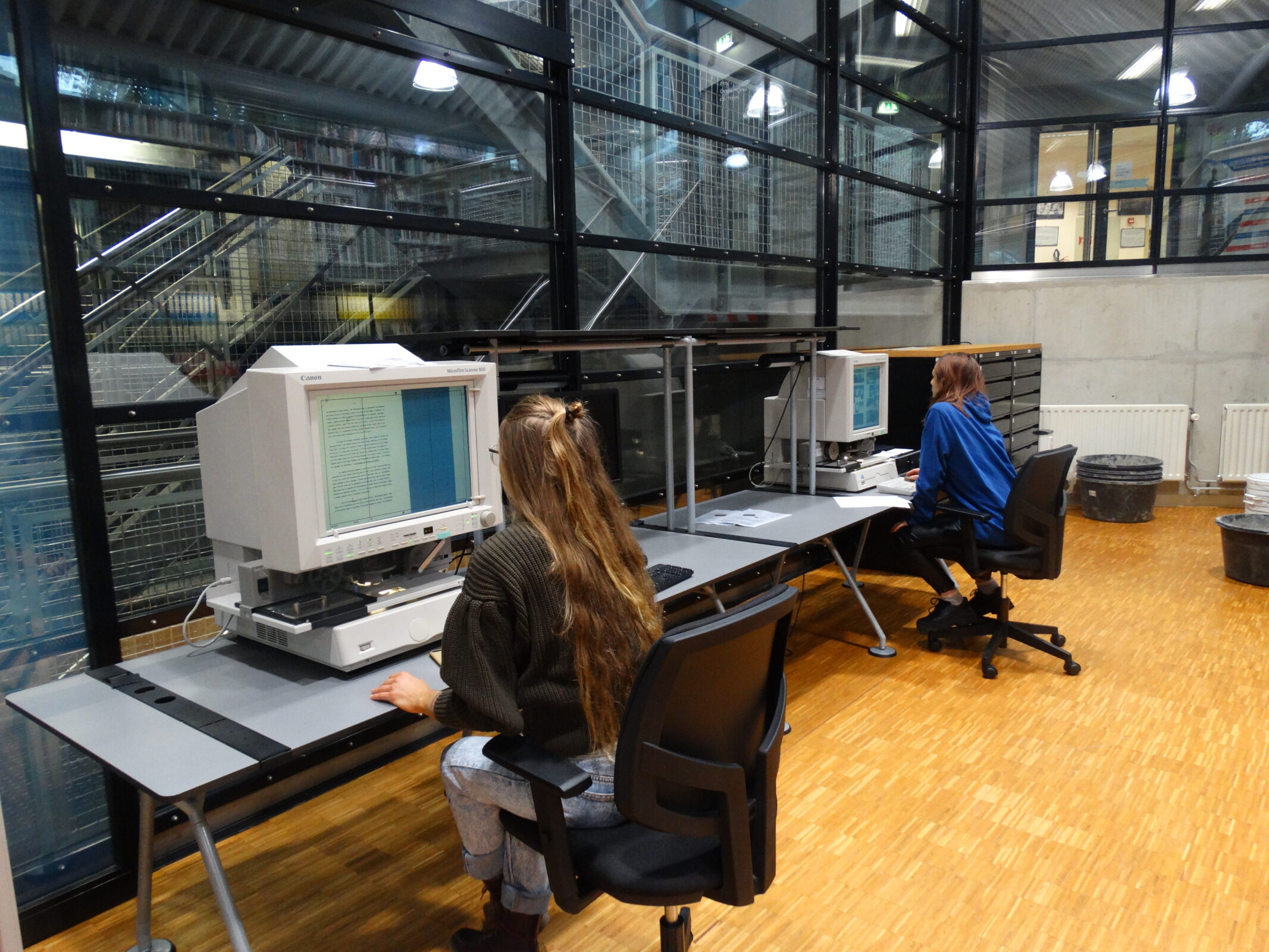
“My main role as a research intern at the RIAS was to develop my research skills through several projects. I catalogued and compiled a research guide on early twentieth-century US Forestry Service meeting minutes, working extensively with microfilm and archival sources. I also wrote a paper on the backlash to Theodore Roosevelt’s conservationist agenda, using primary sources such as historical newspapers. This experience deepened my understanding of the Gilded Age and Progressive Era and allowed me to present my Master’s research at Amerikanistendag at the University of Amsterdam. Overall, the internship strengthened my skills as a historical researcher and contributed greatly to my academic development.”
Thomas Brinkman (Leiden University)
“My main role at the RIAS is to help catalogue, describe, and introduce the newly formed Oceanic Society archive, which allows researchers to learn more about the early history of US marine conservation. This fits well with my studies, as I am a second-year Research Master’s student in History at Leiden University, focusing on Politics, Culture, and National Identities from 1789 to the present. My research interests mainly focus on the relationship between water injustice and the decline of Native American communities, particularly the use of water as a tool of power and control during the Gold Rush era in California. Alongside my work at the RIAS, I am writing a bibliographical essay on this topic. I hope this experience will further develop my research skills and deepen my understanding of environmental and Native American history.”
Ylva Axelsson (Leiden University)
“My main role during my internship was to help organize and promote the first Blue History Graduate Forum, creating a space for interdisciplinary exchange on Blue History. I also worked on an annotated bibliography on Water Archives. This fits well with my studies as a Research Master’s student in Colonial and Global History at Leiden University, where I focus on water history and water justice. The internship allowed me to further develop these academic interests and gain experience in interdisciplinary research.”
Alexander Krauss (Leiden University)
“My main role during my internship was to create podcast episodes and reviews, expand our bibliography, and contribute to the Blue History Network’s resources. I also connected with scholars in the blue humanities through podcast interviews and collaborative exchanges. This experience allowed me to further develop my academic interests while gaining valuable research and communication skills.”
Amelie Homp (Utrecht University)
“During my internship, I contributed to podcast episodes and reviews on water-related issues and helped improve the Blue History Network through editorial and layout work. I also conducted a podcast interview with Petra van Dam on coping with drought. This experience allowed me to connect my studies in Conflict Studies and Human Rights with research on water-related issues.”
Taylor Dingman (Erasmus University Rotterdam)
“During my internship, I researched the historical connection between Onondaga Lake and the Erie Canal in New York, focusing on how this shaped the lake’s development and influenced interactions with it, particularly for members of the Onondaga Nation. I also helped maintain and develop the Blue History Network website. This experience allowed me to further explore my interests in Global History and International Relations.”
Maaike Timmerman (Erasmus University Rotterdam)
“During my internship, I contributed to the Blue History Network, an interdisciplinary project exploring the role of water in history and society. I conducted and hosted two scholarly podcast interviews with experts in maritime history and wrote a Re/View of China Resurrected: A Modern Geopolitical History from a blue humanities perspective. I also researched U.S. policy discourse surrounding the Strait of Malacca using computational text analysis in R. In addition to my research, I supported the development of the Blue History Network website and assisted with the TREnD Staff Training Programme. This experience allowed me to combine my interests in Global History and International Relations with interdisciplinary research and digital methods.”
2025
Marnix Vader (Erasmus University Rotterdam)
“At the Roosevelt Institute for American Studies, my research internship focuses on environmental governance and public sentiment. My primary task is to prepare for and participate in the RIAS Policy Workshop in June, ‘The Montreal Moment: Ozone Depletion and the Rise of International Environmental Governance.’ To contribute meaningfully, I am studying international environmental governance and assisting in developing a methodology to investigate public sentiment on climate governance in the Netherlands during the 1990s. This internship aligns with my ambition to work in policy making, as I am interested in how societies interpret and respond to changes, from climate governance to political movements. Being from Oost-Souburg and now living in Vlissingen, working with the RIAS in Middelburg feels like a natural fit, bringing global issues into a local academic space.”
2024
Maria Schild (University College Roosevelt)
“My main role is to invite environmental historians and authors to speak about themes and issues surrounding ‘blue history’ who have embraced a similar analytical perspective in their works. I am in charge of interviewing these people and creating a podcast that will be easily accessible on our website. These fit in my study area because I am doing a major in History and plan on doing a minor in environmental sciences. I would love to someday do a PhD in naval history.”
Alex Nagel (Utrecht University)
“My role is developing the “Re/Views” section of our project website: building connections between blue history and wider historical scholarship by interviewing authors about their work, asking them how it would change if they placed water at its center. My own work focuses on bridging the gaps between labor and environmental history, looking at how working-class people have idealized, utilized, and defended nature (in and outside the workplace) as a part of their work, in the history of North America.”
Nur Rahmi Nailah (Radboud University Nijmegen)
“My primary role in the Blue History project is to develop a comprehensive bibliography on Blue History as a field of study, which will be featured on the Blue History website. This aligns well with my research interests, as I specialize in Literary Studies with a focus on Indigenous literature, particularly in relation to environmental justice and ecocriticism.”
Auke van Meer (Radboud University Nijmegen)
“I am currently researching the use of public opinion polling by the 1964 LBJ Presidential Campaign. The final output goal is to produce a research paper. Aside from my own research project, I try to assist Gaetano and the RIAS where I can in the organization of academic events, specifically the NASA conference and PhD seminar. This fits within the international research training of my Research Master study program, which aims to broaden the student’s perspectives on and experience with research in an international context beyond the university where the program is conducted.”
Maria Budkiewicz (University College Roosevelt)
“During my internship at the RIAS, I had the unique opportunity to delve into the revolutionary blue history perspective. I took on the challenge of fully designing and managing the blue history website, while also conducting in-depth secondary research for the news & events and sources sections. I analyzed academic journals, databases, blogs, and other resources to pioneer the blue history project. As I move forward, I’m excited to apply both my web design expertise and the critical lens of blue history in my future research.”
Hilla Kauppinen (University College Roosevelt)
“My main responsibility is to create two databases in the realm of Blue History. One includes traditional resources, such as books, journals, and archives, while the other is a collection of vacancies, events, and other relevant current information. In addition to this, I am writing a research paper on environmental justice perspectives on the US Clean Water Act as a part of my internship. Environmental Law and Policy perspectives fit into my studies well, as I am majoring in Law and Political Sciences. Environmental justice and Religion are additional fields that I have focused on during my studies. After completing my Bachelor’s, I will be attending law school.”
2023
Amedeo Gasparini (Utrecht University)
Alessia Aresi (University College Roosevelt)
Emilia Köhn (University College Roosevelt)
