
Short Story
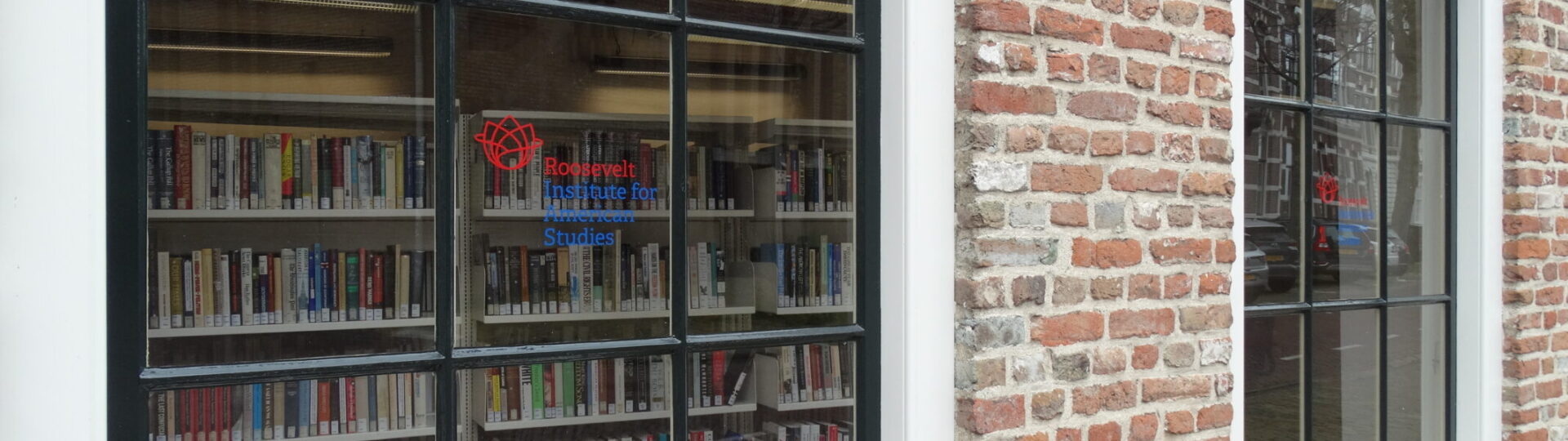
In 2025, as a student of the MA in Applied History at the Erasmus University of Rotterdam, I had the pleasure of completing an internship as a research intern at the Roosevelt Institute for American Studies (RIAS) in Middelburg. Looking back now, six months later, I can safely say that the RIAS has gained a permanent place in my heart. It was far more than just a requirement for my degree, as I experienced a period of profound professional and personal growth. Not only did I have the opportunity to work in an exceptionally welcoming, stimulating, and high-level academic environment, but the institute also played a pivotal role in sharpening my research skills and deepening my passion for climate change, international policy, and U.S. history.
During my internship, I was entrusted with three distinct projects that allowed me to put the theories of “Applied History” into practice.
1. Developing Methodological Tools for Climate Discourse
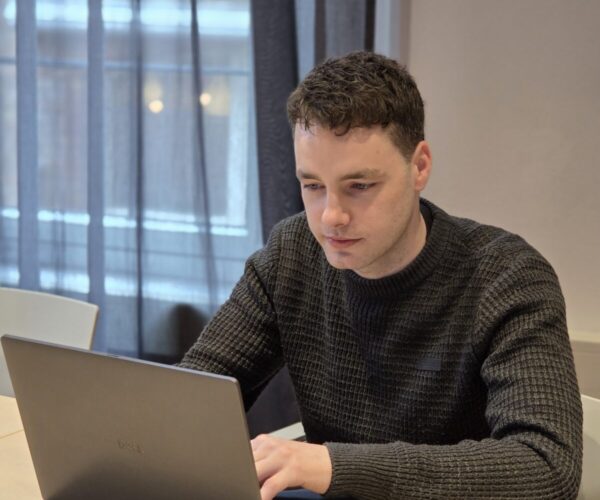
My first major assignment involved setting up a preliminary methodology to investigate how climate change was communicated to the Dutch public between 1985 and 2000. This project required a sophisticated mix of qualitative and quantitative research tools, including network analysis and in-depth archival study. While the methodology itself is an ongoing process of development, contributing to such high-level academic research alongside an interdisciplinary team from the University of Leiden was an incredibly insightful experience. This project proved to be a direct precursor to my current role as Project Leader Water for the Province of Zeeland. It taught me how to function within divergent, expert teams and, more importantly, how to take complex research findings and communicate them in a clear, actionable way to a broader audience, a skill I also apply in provincial governance.
2.Navigating Global Perspectives: “A Water’s History of the United States”
The second assignment of my internship was supporting the organization of a major international conference by the RIAS entitled “A Water’s History of the United States.” This was my first experience engaging with high-level stakeholders from all over the world. It was here that I realized how much I thrive in a fast-paced, international conference environment. More importantly, it sparked my fascination with water as a historical and political subject. I began to understand that water is not just a technical issue, but a topic that is far bigger, heavier, and more interesting than I had previously imagined. This shift in perspective, viewing water through its many political, cultural and social dimensions, formed the intellectual foundation for my current career. As Team Leader Water, I now act as a crucial link between policy and execution for the province of Zeeland.
3.Moderating the Bridge Between Policy and Research
My third project focused on co-moderating a policy workshop on global climate change and the environment. This event brought together a diffuse set of stakeholders, ranging from academic historians to policymakers and NGO representatives. Moderating roundtables was a lesson in active listening and synthesis. I experienced firsthand what it takes to keep a conversation flowing and to ensure that every participant feels heard. The goal was to take a wide array of differing opinions and synthesize them into new solutions and insights for the future, a process that is essentially “Applied History” in its purest form.
A Heartfelt Thank You
Looking back on this journey, I would like to extend my deepest gratitude to the RIAS for providing such a foundational opportunity. The internship was a rigorous exercise in academic writing and critical analysis, a challenge that has since borne fruit in the form of my first publication for the Netherlands American Studies Review (NASR). This achievement is a direct result of the high standards and stimulating feedback I received during my time in Middelburg, and it has taught me the invaluable lesson of how to bridge the gap between archival research and the public scholarly debate.
Beyond the writing itself, the RIAS pushed me to think more critically about the “applied” nature of my degree. the vital role of the past in shaping the present. Perhaps most importantly, the internship helped me clarify my long-term career goals. After finishing my Master’s, I felt a strong pull toward the policy sector. However, I also realized that I did not want to stay solely within the realm of theory. I wanted to see and learn how those grand, innovative ideas are implemented in a practical sense, to learn how policy actually affects people and how communities respond to change.
I have come to understand that effective policy is never just a document on a desk but a living process that must be navigated in the real world. In the field, you have to deal with real people and diverse perspectives. Some will embrace innovative ideas, while others may be more skeptical or resistant. This human dimension is what I am most eager to explore and master in the coming years, and thus learning how to balance the complex, often conflicting needs of stakeholders to arrive at effective policy that the majority, if not all, can truly support.
My current position as Project Leader Water with the Province of Zeeland allows me to maintain that delicate, essential balance between high-level policy vision and ground-level execution. It is the ideal next step in my professional journey, a trajectory that the RIAS prepared me for with great care, providing me with the tools I needed even before I fully realized how essential they would become
